Learn when bathroom exhaust fan installation needs a professional, and what to plan for with ventilation, ducting, power, placement, and safety.
Bathroom exhaust fan installation is more than fitting a fan into a ceiling opening. The fan needs to move damp air outside, have a suitable route for its duct, and connect safely to the home’s electrical system. If you are planning a bathroom update in Grant or Adams County, knowing when the work calls for a professional can help you avoid moisture problems and rework.
When should a bathroom exhaust fan be installed by a professional?
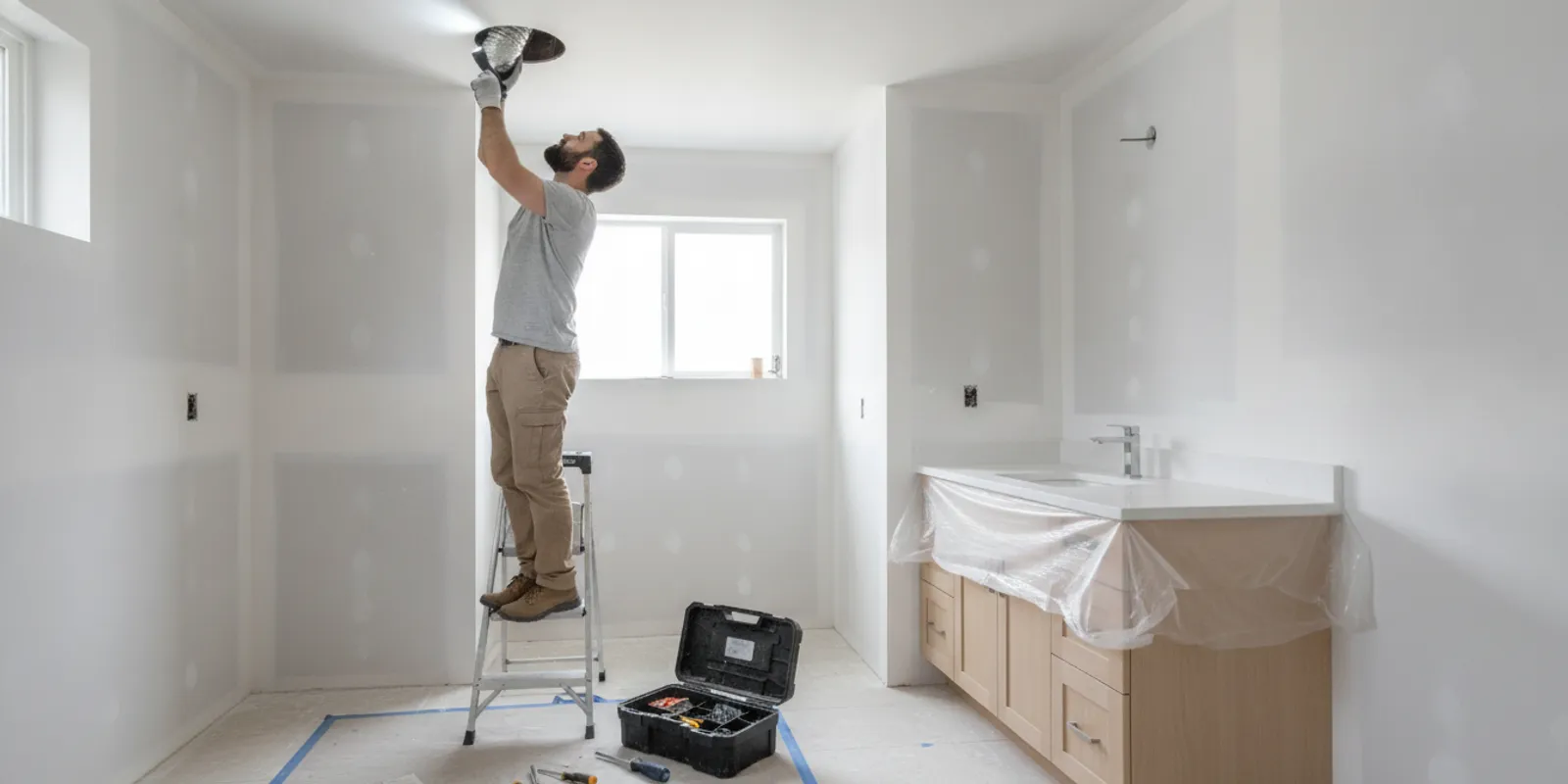
Professional installation is the sensible choice when the fan is new, the wiring needs to change, the duct route is uncertain, or the work involves cutting into a ceiling or roof. A straightforward replacement may still have hidden differences: the new unit may not fit the old opening, its electrical requirements may differ, or the existing duct may end in an attic rather than outdoors.
Ask for qualified help if you notice any of the following:
- The fan has no visible duct, or you cannot confirm where the duct ends.
- The installation requires new wiring, a switch change, or work near existing electrical components.
- The fan is noisy, ineffective, or appears to discharge moisture into an attic or another enclosed space.
- The ceiling is difficult to access, the fan location is being moved, or the duct must pass through a roof or exterior wall.
- You see water staining, persistent condensation, or other signs of moisture damage around the fan.
Do not assume a fan is working well just because it turns on. Airflow depends on the complete path from the bathroom to the exterior, not only the motor. Professional help is also worth considering if the proposed work crosses several trades. A fan replacement might involve ceiling repair, a new exterior opening, electrical changes, or coordination with a broader remodel. Clarifying those boundaries before work begins makes it easier to understand who is responsible for each part and what the finished scope includes.
How does ventilation affect the installation?
A bathroom fan removes humid air and sends it through ductwork to the outdoors. The Building America Solution Center guidance on bathroom exhaust fans advises venting outdoors rather than into an attic, crawlspace, or another interior space. Discharging damp air into an enclosed area can move the moisture problem rather than solve it.
During planning, identify where the duct can travel and where it can terminate outside. A short, direct route is generally easier to plan than a long path with multiple turns, but the right route depends on the home’s framing and exterior. An installer may need to inspect the attic or ceiling space to establish whether the path is practical and whether the proposed exit point is suitable.
Do not cut a roof, siding, or ceiling opening based only on a guess about what is behind it. Framing, existing services, insulation, and weatherproofing details can affect the location and method. If the fan is part of a broader bathroom project, note any planned ceiling or finish changes before the route is finalized. The operating routine matters, too: a correctly installed fan still needs to be used as intended, and the room may need a source of replacement air for the exhaust to work effectively. If a bathroom remains damp, consider whether the fan is run during and after bathing, whether the room door is tightly sealed, and whether the exhaust path is obstructed. These observations can help explain symptoms, but they do not replace checking the installation itself.
What should you know about ducting?
The duct connects the fan housing to an outdoor termination point. Its size, length, bends, support, and sealing all affect how well the system can move air. The existing duct should be checked rather than automatically reused. It may be disconnected, crushed, poorly supported, or routed to an unsuitable location.
- Confirm the outlet. The route should end outdoors through an appropriate termination, not in an attic or wall cavity.
- Check the route. Joists, framing, insulation, and other services may limit the path or require a different approach.
- Look for damage. An existing duct that is loose, blocked, or crushed may undermine a replacement fan.
- Plan the exterior detail. The outdoor termination needs to protect the opening from weather and allow exhaust to leave.
These details are difficult to judge from the bathroom alone. If you are unsure where the current duct leads, tell the installer. That uncertainty is useful planning information, not a reason to remove a ceiling panel or cut into a wall without a plan.
Ask how the installer intends to verify the route and what will happen if the existing duct cannot be reused. A proposal should distinguish the fan itself from related work such as duct replacement, an exterior cap, or patching a finish surface. Also ask how access will be gained and whether the route passes through an area that needs protection during work. These questions help avoid the assumption that a like-for-like fan swap automatically includes every part of a sound exhaust system.
How do power and controls affect fan installation?
A replacement fan must be compatible with the home’s electrical setup and the intended controls. Some installations use a wall switch; others may involve a timer or a different control arrangement. A new fan may also have requirements that do not match the wiring or control already in place.
Before work begins, clarify whether the project is a like-for-like replacement or a change to the circuit or controls. Electrical work should be performed safely and in accordance with applicable requirements. Do not handle exposed conductors or work on energized wiring. If the breaker, wiring, or switch arrangement is unclear, pause and arrange professional assessment.
A residential electrical professional can assess the connection and explain what the planned work includes. For related home electrical upgrades, see AllFix residential electrical services. If the fan is being installed during a larger renovation, the remodeling team’s project scope may also be relevant.
Think through how you want the fan to operate before selecting controls. A timer can help limit the chance that a fan is switched off immediately after bathing, while a simple switch may suit a straightforward setup. Compatibility depends on the fan and the existing electrical arrangement, so treat these as decisions to discuss rather than assumptions to build into a purchase. If the project includes a light or other ceiling fixture, mention that too; combined equipment and separate controls can change the wiring and installation details.
Where should the fan go?
Placement influences how effectively the fan captures humid air and how practical the duct route will be. The fan is commonly positioned near the shower or tub area, while avoiding conflicts with framing, lights, and other ceiling components. The best location depends on room layout, ceiling construction, the manufacturer’s instructions, and the available route to the exterior.
Consider these questions during planning:
- Where does moisture build up most after bathing?
- Can the fan be located without interfering with framing or other fixtures?
- Can the duct reach an exterior termination without an awkward route?
- Will the fan’s sound and controls suit the way the household uses the bathroom?
- Will ceiling repair or repainting be needed after the installation?
Placement should not be chosen solely to cover an existing hole. A new fan that fits the opening but cannot be ducted properly may not perform as intended. For work involving other interior repairs, AllFix also provides handyman services for suitable repair and maintenance needs.
When comparing locations, balance air capture with access for installation and future service. Moving a fan may mean opening and repairing a larger area of ceiling, while keeping it in place may constrain the duct route. A contractor can explain these tradeoffs after considering the framing and the room’s layout. If the bathroom ceiling is being replaced or altered, plan the fan location before the new finish is installed so that the opening, housing support, and duct path can be coordinated.
What can you safely check before requesting an estimate?
You can gather useful information without opening the ceiling or touching wiring. Note whether the fan currently runs, whether it seems to clear steam, and whether you hear unusual noise. Look for visible staining or a loose grille. If you can see the exterior termination from the ground, note its general location, but do not climb onto a roof to inspect it.
When you contact a contractor, share:
- Whether this is a new installation or a replacement.
- The bathroom location in the home and whether it is on an upper floor.
- Any known issue with noise, weak airflow, condensation, or visible damage.
- Whether the bathroom is also being remodeled or the ceiling will be changed.
- Any information you already have about the fan, duct route, switch, or controls.
Photos of the fan, ceiling, and visible exterior termination can help explain the situation, but they do not replace an inspection when concealed conditions matter. AllFix serves Grant and Adams Counties; check the service area information for local coverage details.
It is useful to note when the symptoms occur. For example, does the mirror stay fogged long after a shower, does the fan rattle only at startup, or does a stain appear after rain? Such details can help distinguish a ventilation concern from a possible roof or plumbing leak, though an on-site assessment may be needed to identify the cause. Do not remove the grille or reach into the housing to investigate if you are not comfortable and qualified to do so.
What should you compare when reviewing an estimate?
A useful estimate should make the planned scope understandable. Rather than comparing only the fan unit, compare what each proposal says about the duct route, outdoor termination, electrical connection, controls, and finish repair. Ask what assumptions the estimate makes about concealed conditions and how the contractor will communicate if the conditions differ once work begins.
Confirm that you understand what is included, what is not included, and whether you need to provide a specific fan or control. AllFix uses a free-estimate model and explains project pricing through the estimate process; contact the team to discuss the actual bathroom and requested work. You can learn more about AllFix and its home repair services before deciding on the next step.
Before approving the work, check that the estimate identifies the main components and any exclusions in plain language. You might ask whether the fan is supplied by the contractor or homeowner, how the exterior opening will be weather-protected, whether electrical alterations are included, and how cleanup or finish repair is handled. If a condition cannot be confirmed until access is opened, ask how additional work would be discussed and approved. This is not about predicting every hidden detail; it is about having a clear process for decisions that affect scope.
Frequently Asked Questions
Can a bathroom exhaust fan vent into the attic?
No. Exhaust should be routed outdoors rather than discharged into an attic or another enclosed area. If you suspect the existing fan vents indoors, have the route assessed and corrected as part of a properly planned installation.
Can I replace a bathroom fan myself?
A simple replacement may appear similar to changing a fixture, but the fit, wiring, controls, duct condition, and exterior outlet all matter. If any of those elements need alteration or are uncertain, use a qualified professional and do not work on energized wiring.
Does a new fan automatically fix bathroom moisture?
Not necessarily. The fan needs appropriate capacity for the room and a correctly installed path to the outdoors. Existing moisture sources, poor ducting, or a fan that is not used as intended can also affect results.
What information should I provide when asking for an estimate?
Explain whether you need a replacement or new installation, describe any noise or moisture concerns, and mention whether the room is being remodeled. Include the property location and any details you know about the duct or controls, without opening the ceiling to investigate.
Contact AllFix about your bathroom fan project
When ventilation, ducting, power, or placement is uncertain, a professional assessment can help define the work before installation begins. Request a free estimate to discuss the conditions in your home and plan a safe, suitable approach.
Tell Us About Your Project
Fill out the form below and we'll contact you within 1 business day.