Learn what shapes deck repair cost, from board and railing damage to access and finish work, and get practical tips for preparing and comparing estimates.
Deck repair cost depends on more than the number of boards that look worn. The condition of the framing and connections, railings and stairs, access, finish choices, and size of the repair area can all change the work involved. Since every deck is different, a useful estimate starts with a clear assessment of the specific property, not a generic price.
Get a Free Deck Repair Estimate
What affects deck repair cost?
An estimate should connect the visible problem with the work needed to address it. A few loose surface boards can call for a different scope than widespread deterioration, a moving railing, or a concern about the supporting structure. Before a contractor can explain the work, several details may need review:
-
How much is affected: The number of boards, stairs, or railing sections matters, but so does how the damage is distributed. Several separated areas can involve different access and repair steps than one contained section.
-
What parts are affected: Replacing surface boards differs from addressing framing, connections, posts, stairs, or railings. A visual check from above may not show the condition of every supporting part.
-
How the deck is built: Its layout, height, shape, and connection to the home help define what can be reached and how a repair can be performed.
-
What finish work is wanted: Repairing a damaged component and preparing or refinishing a surface are separate tasks. Clarify whether finish work is part of the request.
-
How the work area can be reached: Stairs, landscaping, gates, obstacles, and the route for moving materials can affect setup and planning.
-
What the estimate includes: A focused repair, several repairs, and repair combined with other property work are different scopes. Ask what is included and what is not.
These factors do not produce a reliable price without project details. AllFix uses a free-estimate model, so the practical next step is to describe the condition and have the work scoped for your deck. Its handyman and property maintenance services include deck-related work; the estimate conversation can help establish whether the requested task fits your needs.
How do the boards and repair area shape the scope?
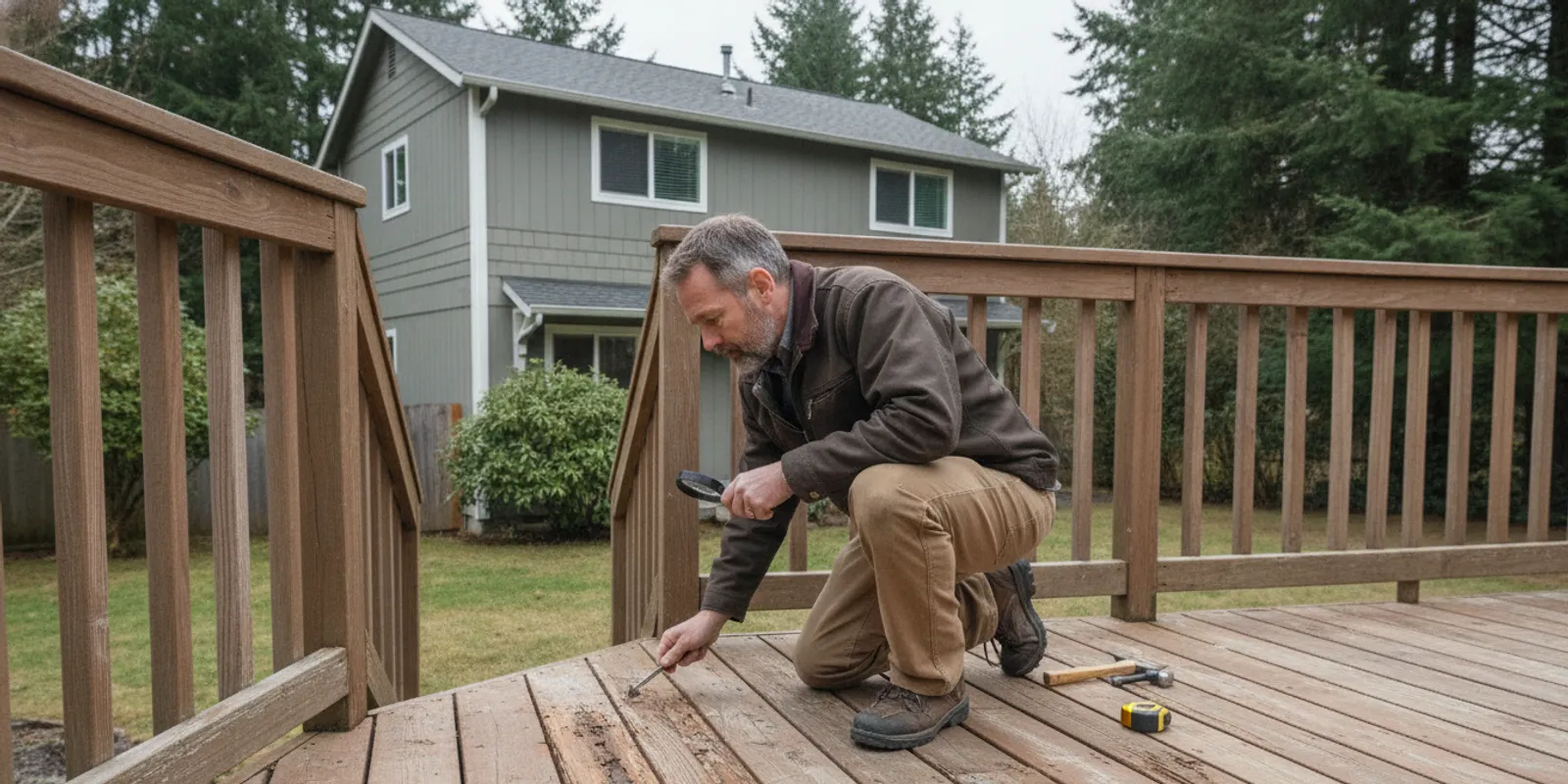
Start with what you can observe safely. Note boards that feel soft, split, warped, loose, splintered, or visibly deteriorated. Record where each issue is: near the house, along an edge, at a stair landing, or in a particular walking path. A rough sketch or a few photos can make those locations easier to describe later.
Then consider whether the condition appears isolated or repeated. A single damaged board in one area is not the same observation as similar wear across multiple parts of the deck. The distribution may help guide the assessment, but it does not prove what caused the damage or reveal the condition of hidden parts. Avoid assuming that a surface patch will resolve a problem that may extend below it.
For example, imagine that one board near an entrance is visibly split while the rest of the walking surface appears firm. That is useful information to share, but an estimate still needs to establish what work is appropriate and whether nearby components should be checked. In a second example, several boards in different areas feel soft. A list of each location is more useful than saying only that “the deck is worn,” because it helps the contractor understand the extent of the concern and plan what to inspect.
Take photographs from a safe place and include both close views and an overall view. Do not step onto a section that seems unstable just to get a better picture. If an issue is difficult to see in a photo, a plain description of where it is and when you noticed it can still help.
Do railings, stairs, or structural concerns change the estimate?
They can, because they add distinct components and tasks beyond a surface-board repair. A loose railing, a damaged stair tread, or a section that moves under normal use should be identified when requesting an assessment. These conditions should not be treated only as appearance issues.
Describe what you observe without trying to diagnose the cause. For instance, explain which railing section moves, which stair tread is split, or where the deck seems uneven. If you have noticed a change over time, say so. If a section feels unstable, limit access to it and do not attempt a repair unless you are qualified to do that work.
An estimate should distinguish visible repairs from additional work that may be identified during assessment. Ask which parts will be inspected, which components are included in the proposal, and how the contractor will discuss a change in scope if concealed conditions become visible after work begins. That conversation helps prevent an assumption that replacing a board also covers every related support or connection.
When you review an estimate, look for specific descriptions rather than a broad phrase such as “repair deck.” The document or discussion should make it possible to understand whether the proposed work addresses boards, railing sections, stairs, or other identified parts. If anything is unclear, ask for an explanation before agreeing to the scope.
How is refinishing different from repairing a deck?
Refinishing focuses on the condition and appearance of the surface finish. Repair focuses on damaged, loose, or otherwise unsuitable components. A deck may need one, the other, or both, but new finish work is not a substitute for addressing a damaged board or a structural concern.
When requesting an estimate, identify your main goal. Are you concerned about a specific defect, the look of the surface, or both? If finish work is under consideration, ask what preparation is included and whether the repair and finish portions are listed separately. Clear boundaries are useful because a surface can need preparation before a finish is applied, and that work may not be part of a repair-only scope.
If the surface looks weathered but you have not checked whether boards are sound, describe both the appearance and any movement, softness, or splitting you have noticed. This gives the person assessing the deck a fuller picture without asking you to decide which treatment is appropriate. Do not assume that a product applied over the surface will correct damage underneath.
When should you repair rather than consider replacement?
A repair may be a reasonable option when the issue is contained and the rest of the deck is in suitable condition. Broader replacement may be worth discussing when deterioration appears in several areas, multiple components need attention, or assessment finds concerns beyond the visible surface. One visual clue alone cannot determine which option is right.
Use the assessment to compare the actual scopes. Ask whether the suggested repair addresses the concerns you reported, what other parts were checked, and whether any conditions remain outside the work. If replacement is raised, ask what observed issues make it worth considering and what a focused repair would and would not address. The goal is not to choose the smallest or largest project automatically; it is to understand the condition and the practical differences between the options.
-
Are the problems confined to a small, identifiable section?
-
Do boards, stairs, or railings in other areas show similar conditions?
-
Are the concerns limited to visible surface components, or are supporting parts also involved?
-
Would a targeted repair address the problems you have noticed, or leave related work unresolved?
-
What is included in each option, and what would prompt a conversation about additional work?
AllFix also offers remodeling services for larger home projects. If your plans go beyond a localized deck repair, explain the broader goals when discussing next steps; do not assume a repair estimate covers remodeling work that has not been scoped.
How can access and the work area affect planning?
The deck's height and layout can affect how a crew reaches the repair area and moves materials. Stairs, narrow gates, landscaping, nearby structures, and limited room to stage materials may all be relevant. These details do not necessarily mean a project is difficult, but they help make the scope and setup assumptions clear.
Before the estimate visit or conversation, note how the work area can be reached and whether there are access restrictions. If the property is managed or shared, explain any rules for entering the yard or using a common area. Move personal items only when it is safe and practical. Do not dismantle a railing, remove boards, or clear an unsafe area yourself to prepare for a visit.
Also mention whether there are pets, gates, or particular times when access is available. For homes in Grant, Adams, or Spokane County, service availability can vary by location and service. Check AllFix's service area information and include the property's city when making an inquiry.
What information should you gather before requesting an estimate?
A short, organized description is enough to start the conversation. You do not need to measure every board, calculate material quantities, or determine the cause. Gather what you know and leave the assessment of the repair scope to the contractor.
-
Describe the deck: Give the property location and a general sense of the deck's size, layout, and access. Approximate details are fine if you do not have measurements.
-
List the concerns: Note which boards, railing sections, stairs, or other areas seem damaged, and what you observe about each one.
-
Share safe photos: Include a broad view and closer images of the visible issues. Avoid walking onto a section that feels unstable to take them.
-
State the result you want: Explain whether you want a specific repair assessed, a broader condition review, or a conversation about repair and finish work.
-
Identify access details: Mention gates, pets, shared-property arrangements, or other practical restrictions.
-
Ask about scope: Request an explanation of the included work, exclusions, and how newly discovered conditions will be discussed.
This preparation helps you explain the request without presuming what the solution should be. AllFix describes its project process through a free-estimate model. You can contact AllFix with the deck's location and the issues you have observed to begin an estimate conversation. The company serves property owners in Grant, Adams, and Spokane counties, with Moses Lake as its primary service hub.
How should you compare deck repair estimates?
Compare the work described, not only the bottom-line figures. Two proposals can differ because they cover different boards, different railing or stair work, or different finish preparation. A price comparison is not meaningful until you know whether the scopes are alike.
-
Which specific areas and components are included?
-
Are stairs, railings, and related connections included or excluded?
-
Does the proposal include finish preparation or refinishing?
-
What assumptions were made about parts that are not visible?
-
How will additional conditions be explained and approved before the scope changes?
-
Are access, work-area preparation, and cleanup expectations clear?
-
Does the proposal explain what the recommended work is intended to address?
If one estimate uses broad terms, ask for more detail in plain language. If two proposals recommend different approaches, ask each provider to explain the observations behind the recommendation. You can then compare what each option addresses and what remains outside its scope. Avoid treating a lower number as equivalent when it covers fewer tasks, and avoid assuming that a longer scope is necessary without understanding why.
A written scope is a planning tool as well as a price proposal. It should help you understand the work being proposed, the conditions it is based on, and the next step if the situation differs once work is underway. Keep your notes and photos with the estimate so you can check that the described areas match the concerns you raised.
What should homeowners, landlords, and property managers keep in mind?
For an owner-occupied home, the main priority may be addressing a particular unsafe-feeling or damaged area. A landlord or property manager may also need to record exactly where the issue is, coordinate access, and communicate any limits on use while an assessment is pending. In either case, a location-specific description is more useful than a general note that the deck needs work.
If several properties are involved, keep a separate record for each deck. Label photos with the property and location, and note whether the issue concerns a stair, railing, or walking surface. This avoids mixing observations from different sites and makes it easier to discuss the right work at each property. Do not combine multiple decks into one assumed scope unless the estimate explicitly covers them.
Owners planning other property improvements can also review AllFix's project gallery for examples presented by the company. Examples can provide context for a conversation, but they do not establish the condition of your deck or guarantee a particular result for another property.
What safety and maintenance details should you note?
Check the deck periodically from a safe position for boards that move, splintering, visible deterioration, loose railings, and changes around stairs or connections. Note where a condition appears and whether it has changed since you last checked. These observations can help explain the concern, but they are not a substitute for a professional evaluation.
If a section seems unstable, keep people away from it and avoid placing extra weight on it while you arrange an assessment. Do not rely on a temporary covering to make a damaged area safe. Avoid removing components or attempting structural work unless you are qualified to do so. If you are unsure whether the deck can be used safely, err on the side of restricting access until it has been assessed.
Routine observation can also help you distinguish a new change from a condition that has been present for some time. A simple note such as “the west railing began moving” is more actionable than trying to name a cause. Share relevant past repairs or changes if you know about them, but do not guess about concealed damage.
What should Washington property owners check before hiring?
Washington property owners can consult the Washington State Department of Labor & Industries for contractor and consumer resources. Visit the Washington L&I website and look for current contractor registration information relevant to home improvement work. Requirements and guidance can change, so use the state agency's current information when checking details.
AllFix presents itself as a locally owned, licensed, bonded, and insured contractor serving Grant, Adams, and Spokane counties. Ask what the proposed work covers and who will explain any changes to the scope. You can also read the company's reviews page as part of your own research; do not treat a review or a photograph as a promise that another project will have the same outcome.
Frequently Asked Questions
Can I get a deck repair estimate from photos alone?
Photos can show visible conditions and make an initial conversation more useful, but they may not reveal supporting parts, access needs, or concealed conditions. A project-specific estimate may require an assessment of the deck.
Should I include refinishing in a repair request?
Include it if you want the appearance or finish addressed, but identify it separately from repairing damaged components. Ask what preparation and finish work are included rather than assuming they are part of a repair scope.
How do I know whether repair is enough?
The answer depends on the extent of the damage and the condition of related components. Ask for an assessment and an explanation of whether the recommended repair addresses the concerns or whether broader replacement should be discussed.
Does AllFix provide free estimates?
AllFix follows a free-estimate model. Share the property's city, the areas of concern, and the work you want considered to start the conversation.
How can you take the next step?
Before reaching out, list the affected areas, note any railing or stair concerns, and decide whether you also want finish work considered. These details can help make the estimate conversation more productive. To discuss your project, contact AllFix with the property location and a clear description of what you have observed.
Request a Free Deck Repair Estimate
A clear, project-specific estimate can help you understand the proposed work before deciding how to proceed.
Tell Us About Your Project
Fill out the form below and we'll contact you within 1 business day.