Learn what affects fence repair cost, how damage and materials shape the scope, and what to share when requesting a free estimate in Grant County, Adams County, or Spokane County.
Understanding fence repair cost starts with the condition of the whole fence, not just the spot that looks damaged. A loose board, leaning post, sagging gate, or broken section can point to different scopes of work, and the material and access also matter. This guide explains what to look at before requesting an estimate, without relying on generic prices that may not fit your property.
Request a free fence repair estimate
What determines fence repair cost?
There is no useful one-size-fits-all figure for a fence repair. Two fences with a similar-looking break may need different work once a contractor checks the posts, adjoining sections, gate hardware, and the way the fence is set up. A sound estimate should describe the work needed at this property rather than apply a generic price to a photo or a short description.
These details commonly shape the scope:
- Material and construction: Wood, vinyl, and chain-link fences have different components and repair methods. The exact product, condition, and availability of compatible parts can matter.
- Type of damage: A missing board is different from a leaning post, torn mesh, cracked panel, or gate that will not close.
- Extent of the affected area: The number of damaged components and whether neighboring sections are also loose can change how much work is involved.
- Repair or replacement: A localized fix may be practical, while widespread wear or repeated failures may warrant discussing a larger section or replacement.
- Access and site conditions: The route to the fence, nearby landscaping, stored items, slope, and room to work can affect planning.
- Gate and hardware needs: A gate that is out of alignment may need attention beyond the fence panel itself.
The best next step is to describe what you see and let the estimate clarify what is included. If you are comparing fence work with other property repairs, AllFix's handyman and property maintenance services are a useful place to check the general service scope.
How does fence material affect the estimate?
Material matters because a fence is a system of connected parts. Matching the existing fence, working with its construction, and understanding the location of the damage all influence the repair plan. Do not assume that a repair is identical just because two fences look similar from the street.
What should you know about wood fences?
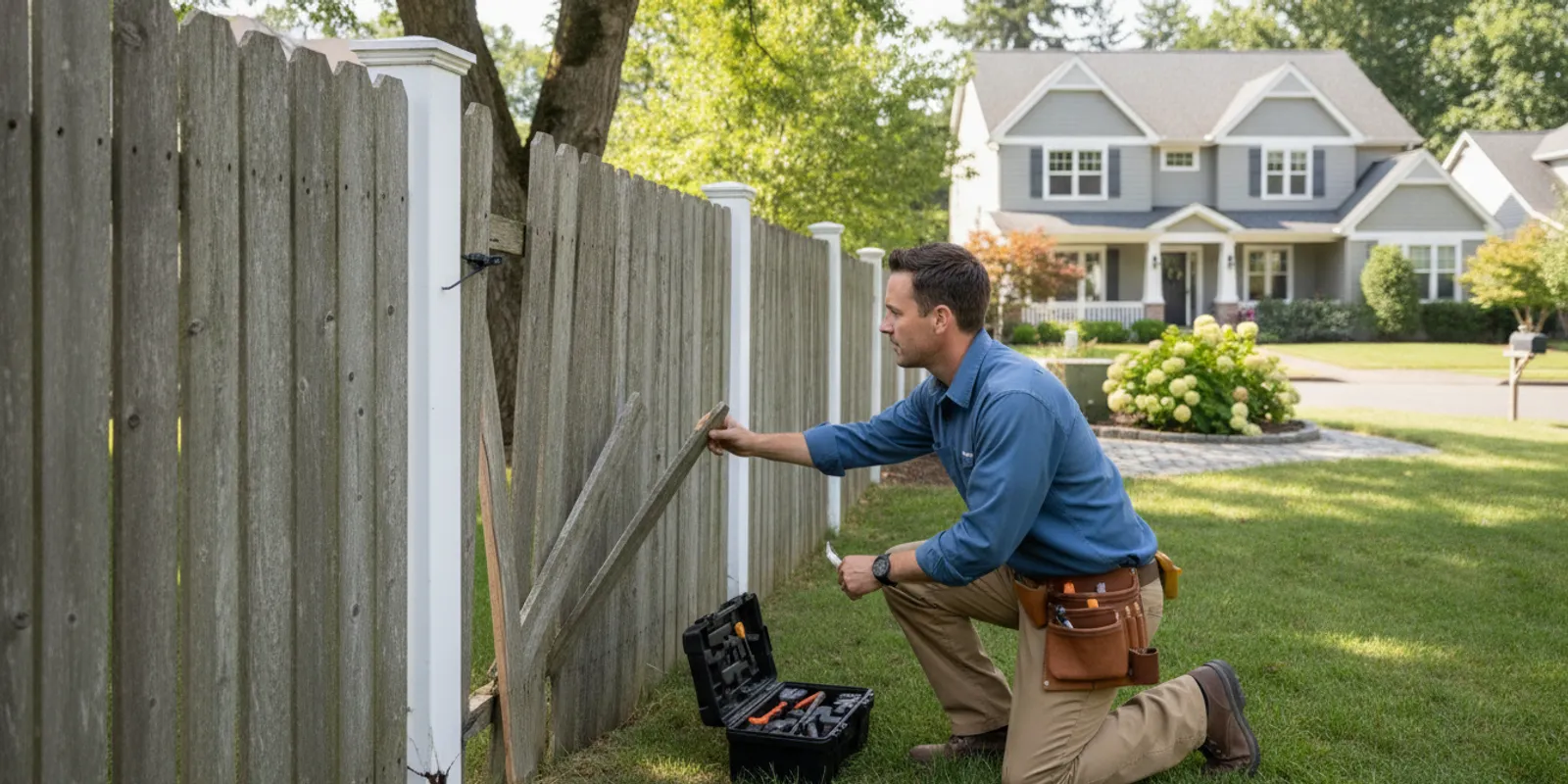
Wood fences are made from individual boards, rails, and posts. A damaged board may be replaceable without changing the rest of the run, but a loose or leaning post can affect the sections attached to it. Rot, splitting, warping, or loose fasteners may also appear in more than one place. Note whether the visible damage seems limited to a board or whether the fence moves or leans nearby.
It can be hard to judge the condition of a post or rail from the yard side alone. A clear description and photos can help start the conversation, but they cannot confirm what is sound below ground or behind adjoining components. A site assessment may be needed to establish the repair scope.
What should you know about vinyl fences?
Vinyl fences use panels, rails, posts, and connectors that need to fit together. A cracked panel may look like a single-part problem, but a shifted post or damaged connector can contribute to the break. Bring up any loose sections or repeated movement, not only the most visible crack. A replacement piece also needs to suit the existing fence, so the product and configuration are useful details to identify if you know them.
What should you know about chain-link fences?
Chain-link fencing includes mesh, posts, rails, and tension-related components. A bent post, torn mesh, or loosened section can have a different scope from a small, localized issue. Describe the length of the visibly affected area and whether the fence has pulled away from a post or rail. Avoid pulling or tightening a damaged section yourself if doing so could worsen the problem.
For any material, tell the contractor if you have leftover matching parts or product information, but do not assume they will be usable until the fence is assessed. A repair plan should account for what is present and what can be matched, rather than promise a particular appearance before review.
Does the type of damage change the work?
Yes. A short list of symptoms helps separate a simple component repair from a broader stability issue. Before requesting an estimate, walk the fence from a safe distance and record what is visibly out of place. Do not climb on, push hard against, or dismantle an unstable fence to investigate.
- Loose or missing boards: Note how many boards appear affected and whether the rails behind them look straight and secure.
- Leaning or loose posts: Identify which posts lean, whether adjacent sections have shifted, and when you first noticed the movement.
- Broken panels or rails: Describe where the break is and whether it continues across more than one section.
- Damaged mesh or connections: For chain-link, note visible tears, bent parts, or areas that have pulled loose.
- Gate trouble: Explain whether the gate drags, swings unevenly, will not latch, or appears to be pulling on its post.
- Repeated damage: Mention if the same area has needed attention before or if the condition has changed over time.
Be factual about the cause. If you know a vehicle, falling branch, or other event damaged the fence, say so. If you do not know what happened, say that instead of guessing. The estimate can address visible conditions and the work required; it should not be treated as a determination of insurance coverage or responsibility.
When is a repair more appropriate than replacing a section?
A repair may be worth considering when the damage is localized and the surrounding fence remains serviceable. Replacing a board, reconnecting a component, or correcting a limited gate issue may address the problem without changing a long run. Whether that is practical depends on the condition of the parts around it and the ability to complete a compatible repair.
A larger repair or replacement discussion may make more sense when multiple posts or sections are failing, the fence has widespread deterioration, or previous small repairs have not resolved the issue. A mismatch in age, material, or appearance can also affect whether a small patch is a satisfactory outcome. These are considerations, not automatic rules. The property owner and contractor can review the condition and decide what scope makes sense.
When you receive an estimate, check that it distinguishes the repair area from any optional broader work. Ask what components will be repaired or replaced, what is excluded, and whether the proposed scope addresses only the visible damage or related sections too. If replacement is discussed, ask which sections are included and what will remain as-is. Clear scope makes it easier to compare approaches without assuming that the lowest or broadest option is automatically right.
How do gates, access, and nearby features matter?
Fence sections do not exist in isolation. A gate can add hinges, a latch, alignment, and a post that bears movement. If the gate is sagging, say whether it is difficult to open, drags along the ground, or no longer closes securely. If it works normally, mention that too. Those details help focus an assessment.
Access is another practical part of planning. Let the estimator know if the damaged section is behind a locked gate, close to a building, bordered by dense planting, or reached only through a narrow passage. Mention pets, tenants, or business activity that may affect access or scheduling. Do not move heavy objects or cut plants just to prepare unless you have confirmed that doing so is safe and appropriate.
Nearby features can also help explain the situation. For example, note whether the fence meets a wall, retaining feature, driveway, or another fence. This is not a claim that every adjacent feature needs work; it simply gives the contractor context to understand the repair area.
What information should you gather before requesting an estimate?
You do not need to diagnose the fence or calculate the repair yourself. A few accurate details can make the first conversation more useful and help identify what needs an in-person look.
- Identify the material if you can. Say whether it appears to be wood, vinyl, or chain-link. If you are unsure, describe what you see.
- Describe the location. Note which side or portion of the property is affected and an approximate count of damaged sections or components.
- Explain the visible symptoms. Mention leaning, missing boards, a broken panel, loose mesh, or a gate problem. Separate what you observed from what you suspect.
- Take a few photos from safe positions. Include one wider view for context and closer views of the damage. Avoid entering a hazardous area or touching unstable parts for a better image.
- Share access details. Note gates, obstacles, pets, tenant arrangements, or other site conditions that an estimator should know about.
- State your goal. Explain whether you are looking for a localized repair, want to understand repair versus replacement, or need the fence reviewed as part of broader maintenance.
Keep any known product details or information about a past repair available. You can also note when you first saw the damage and whether it changed. If you want to browse examples of home projects, the AllFix project gallery offers visual context, but it should not be treated as a prediction of how a fence repair will look. Do not delay getting advice if a fence appears unstable or creates an immediate safety concern; keep people away from the affected area while you arrange appropriate help.
AllFix serves property owners in Grant County, Adams County, and Spokane County, with Moses Lake as its primary service hub. Service availability varies by location and type of work, so use the service area information or ask when you contact the team. The company's local home repair and maintenance services bring multiple property needs under one provider, though a particular service should always be confirmed for your location.
How can you review a fence estimate?
Focus on scope, not just the total. An estimate is more useful when it lets you understand the planned work, the affected area, and any assumptions. Before accepting work, check whether the document makes clear:
- Which fence sections, posts, boards, panels, mesh, rails, or gate components are included.
- Whether the work is a repair, partial section replacement, or a broader replacement proposal.
- What visible conditions are excluded or may require a separate decision if found during work.
- Whether access or preparation is expected from you before the work begins.
- How the estimate handles material matching, where relevant.
- What the next step is if the scope needs adjustment after review.
If you compare estimates, make sure they cover comparable work. One proposal may address only a broken panel while another includes posts and adjoining sections. Ask questions about any difference rather than comparing totals without context. AllFix uses a free-estimate model; the estimate is the route to project-specific pricing, not a published standard rate.
Washington property owners can consult the Washington State Department of Labor & Industries for information related to contractor licensing and registration. Confirm the relevant details for the work and contractor rather than relying only on an online description.
What can you expect when requesting a fence estimate?
Start with the location, fence material if known, visible damage, and your preferred outcome. If you have photos, provide them as a starting point. The team may need to ask follow-up questions or review the fence in person to determine a suitable scope. A photo alone cannot show every connection, post condition, or access issue.
AllFix provides free estimates and communicates after a form submission within one business day. Service response times may be one to three business days. These are communication and service-planning details, not a promise of a specific appointment or completion date. Share any timing constraints when you ask, and confirm the next step with the team.
To discuss a fence repair, use the contact page and include the property location and a concise description. AllFix provides handyman repairs and property maintenance alongside remodeling and residential electrical work; electrical service is residential. Confirm that fence work is available at your address before scheduling.
Learn about AllFix handyman services
Frequently Asked Questions
Can I get a fence repair estimate from a photo?
Photos can help communicate the visible damage, but they may not show the condition of posts, connections, or adjoining sections. Share clear photos if available, then ask whether an in-person review is needed to define the work and project-specific estimate.
Should I repair one damaged section or replace the whole fence?
It depends on how localized the damage is and the condition of the remaining fence. A limited repair may be practical when surrounding components are sound. Widespread deterioration or repeated failures may call for a larger discussion. Review the condition and compare clearly defined scopes before deciding.
What should I do if a fence is leaning?
Keep people and pets away from a visibly unstable area. Do not push, climb on, or dismantle it to test its strength. Note where it leans and whether nearby sections have shifted, then ask a qualified contractor about an assessment.
Does AllFix publish fence repair prices?
No published standard price is provided here. Fence repair cost depends on the material, damage, scope, and site conditions, so request a free estimate for project-specific pricing.
Does AllFix serve every city with fence repair?
AllFix serves Grant County, Adams County, and Spokane County, but service availability can vary by location and work type. Check the service area information or contact the team to confirm coverage for your address.
What is the next step?
Record the material, visible damage, affected area, access details, and whether you are considering repair or replacement. Then request a free estimate and ask for a clear description of the proposed scope so you can make an informed decision for your property.
Tell Us About Your Project
Fill out the form below and we'll contact you within 1 business day.