Learn how to document home electrical symptoms safely, recognize warning signs, and decide when to contact a licensed residential electrician.
Home electrical troubleshooting starts with observing the change, not opening a switch, outlet, fixture, or electrical panel. A light that flickers, a breaker that trips, or an outlet that stops working can have different causes, and the visible symptom may not reveal what is happening behind a wall. Your safest first task is to note what changed, keep away from anything damaged or hot, and share clear observations with a qualified professional.
Request a free electrical estimate
What does safe troubleshooting mean?
For a homeowner, safe troubleshooting means recognizing a symptom, noticing its scope, and deciding whether to keep away and seek help. It does not mean taking electrical equipment apart or testing wiring. Household electrical systems can present shock, burn, or fire hazards, including when a device appears to be switched off. A cover that looks simple to remove may conceal energized components, and a symptom at one location can have a cause elsewhere in the circuit.
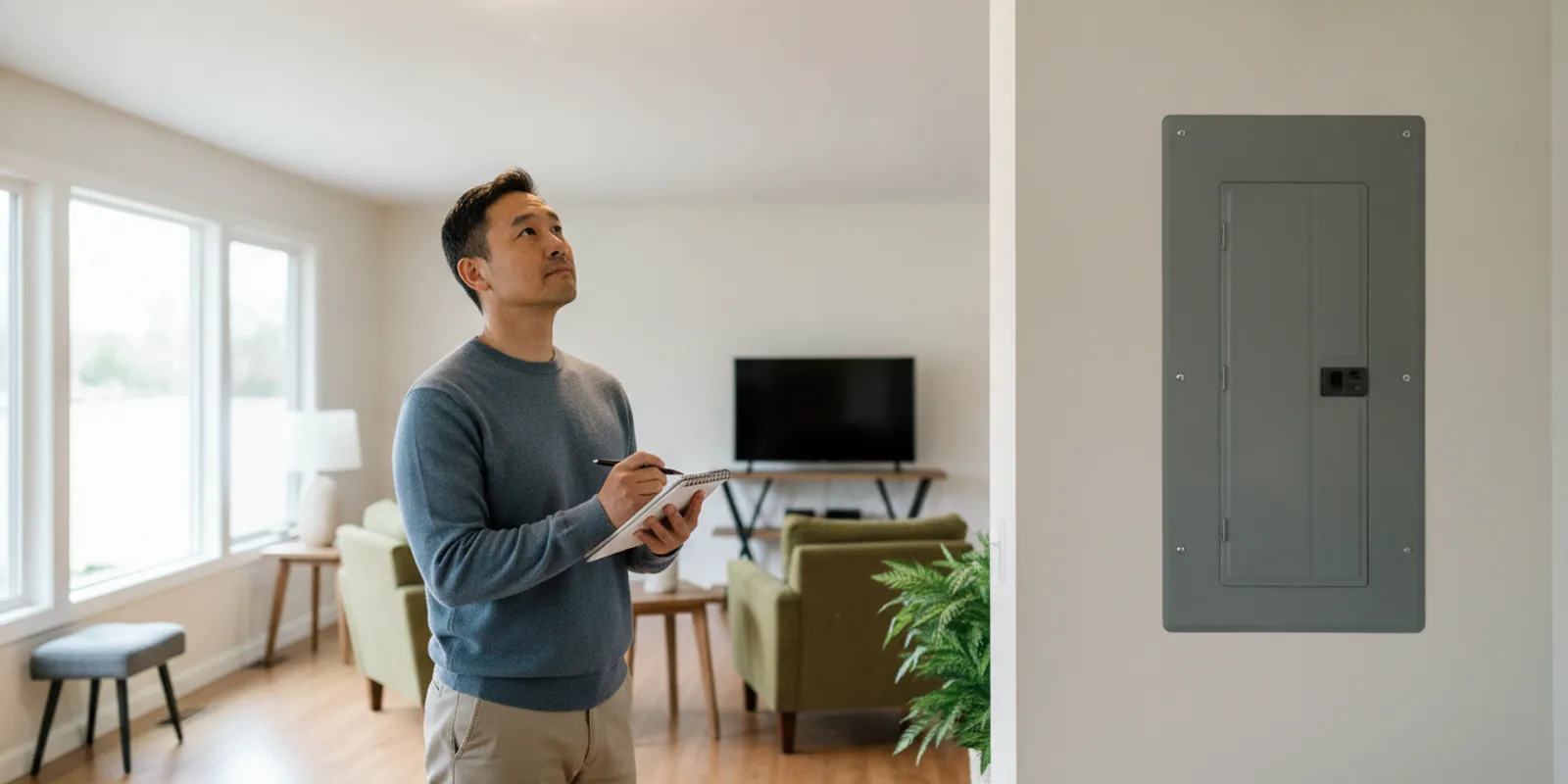
Set a simple boundary: look and listen only from a safe position. Do not remove a cover, insert an object into an outlet, handle exposed wire, or reach into a panel. Do not use a multimeter or other test equipment unless you are qualified and know how to use it safely. If a symptom is unclear, that is a reason to describe what you noticed and ask for professional guidance, not a reason to investigate further.
The U.S. Consumer Product Safety Commission offers consumer safety information at its official website. For a specific condition in your home, general information cannot replace a qualified on-site assessment. If there is immediate danger, prioritize people and emergency assistance over taking notes or contacting a contractor.
What should you notice before you call?
Gather details from a safe location. A short, factual account can help an electrician understand what you are reporting and ask useful follow-up questions. Record what you already know rather than creating new tests to fill in gaps.
- Location: Identify the room and the affected light, outlet, switch, appliance, or area. You do not need to know which circuit serves it.
- Scope: Note whether one device is affected, several locations in one room, or a larger part of the home.
- Timing: Write down when you first noticed the change and whether it happened once, intermittently, or continuously.
- Context: If you already know what was in use at the time, record it. Do not switch appliances on or off to reproduce the event.
- Other signs: Note any odor, unusual sound, visible damage, moisture, warmth, smoke, or loss of power, but do not move closer to verify a suspected hazard.
- What changed: Describe the result in ordinary language, such as “the kitchen ceiling light dimmed when I noticed it” or “two outlets stopped working.”
Keep observations separate from conclusions. “The lamp in the bedroom flickered twice after dinner” is more useful than “the wiring is loose” when no one has inspected it. Avoid labeling a part as failed or assuming that a particular appliance caused the issue. A professional can decide what further assessment is appropriate.
Which symptoms are useful to describe?
Flickering or dimming lights
Describe which lights are involved and whether the change seems limited to one fixture or visible in several rooms. Note whether you noticed it at one moment or more than once. Do not climb to reach a bulb or fixture, remove a shade or cover to inspect connections, or handle wiring. If the light is accompanied by smoke, a burning odor, sparks, unusual heat, or visible damage, move away and treat the situation as a safety concern rather than an ordinary service request.
An outlet or switch that no longer works
Record the location and whether other nearby devices were affected at the same time. Do not remove the faceplate, insert a tool, or touch an outlet that is cracked, wet, discolored, unusually warm, sparking, or making noise. Keep people away from a suspect location. If you cannot tell whether a surface is safe, leave it alone and tell the professional what you observed.
A breaker that trips
Record when you noticed the trip and what was in use, if that information is already known. A breaker that trips again is not a cue to keep resetting it, and repeated attempts can delay attention to the underlying issue. Do not open the electrical panel or remove its cover. Tell the professional whether this was a single event or a repeating pattern, and whether anything else changed in the home.
Power loss in part or all of the home
Note whether the interruption seems limited to one appliance, one room, or a larger area. If you already know that neighboring homes or street lighting are also affected, include that in your report. Do not approach downed wires or damaged utility equipment. Contact the utility or emergency services from a safe place when the concern appears to involve utility equipment or an immediate hazard.
Buzzing, crackling, odor, or unusual warmth
These observations deserve particular caution. Do not touch the equipment to check its temperature, put your ear near it, or attempt to identify the source by removing a cover. Move away, keep others clear, and describe what you noticed. Smoke, flames, active sparking, or a strong burning smell call for immediate distance and emergency assistance as appropriate.
When should you stop observing and keep away?
Stop approaching the affected equipment if you see sparks, smoke, flames, exposed or damaged wire, scorch marks, or water near electrical equipment. The same applies if a switch or outlet looks discolored, seems unusually warm, or produces buzzing or crackling. Do not touch it, use it, or try to determine whether it is energized. Keep children, visitors, and pets away from the area.
If there is fire, smoke, or immediate danger, leave the area and call emergency services from a safe location. Never use water on an electrical fire. If someone may be in contact with an electrical source, do not touch that person while the source may still be energized; call emergency services and follow their instructions. For a suspected hazard involving utility equipment or a downed line, stay well clear and contact the appropriate utility or emergency service.
Do not delay leaving an unsafe area to take a picture, write a detailed timeline, or contact a home-service provider. Safety comes first. Once everyone is safe, share only the observations you can recall. An incomplete report is better than moving closer to a hazard.
How can you document the issue without testing it?
Use a short note on your phone or paper. Include the date and approximate time, where the problem appeared, what changed, and whether it is still happening. If someone else saw it, ask for their description without asking them to recreate it. Note relevant context you already know, such as an appliance that was running, but do not switch anything on to check.
A photo can sometimes show visible damage or the location of a symptom, but only take one from where you are already safe. Do not move furniture, climb, remove a panel, or approach smoke, water, heat, sparks, or exposed wiring for a better view. Do not touch the equipment to pose or move it. If photography would bring you closer to a possible hazard, skip it.
Keep the note practical. You might write: “At about 7 p.m., the hallway light flickered twice while I was in the next room. I did not touch the fixture. It has not happened again.” If the same symptom returns, add the date and what you observed. This timeline can help explain whether the issue is isolated or recurring without claiming to identify a cause.
How do you decide whether the concern is urgent?
Use the warning signs you can see or smell to decide whether to stop and seek urgent help, not to diagnose a component. Fire, smoke, active sparking, exposed wire, a strong burning odor, water at electrical equipment, or a person in danger are reasons to get away and contact emergency services or the utility as appropriate. Keep people out of the affected area while you wait.
If there is no visible immediate hazard but a light or outlet has stopped working, a breaker has tripped once, or an electrical change keeps recurring, arrange professional guidance. Do not assume that an issue is harmless because it stopped temporarily. Do not keep resetting a breaker, repeatedly operate a suspect switch, or use a damaged outlet to see whether the problem returns. Explain whether the symptom is still present and ask what precautions to follow before an assessment.
When you are uncertain which category applies, describe the observed signs to emergency services, the utility, or a qualified electrical professional and follow their direction. This guide is not a substitute for emergency response or an in-person evaluation.
What should you tell an electrician?
Start with the plain-language symptom and its location. Then give the timeline, whether other areas were affected, and any warning signs. Mention what you have not done as well: for example, that you have not opened the panel or used the outlet since noticing damage. If you are unsure about a detail, say so rather than testing the equipment to answer a question.
You can ask what information would help arrange an assessment and what precautions to take while waiting. Ask what the estimate covers and whether the described work is residential electrical service. The person assessing the issue can explain what they find and what work, if any, is appropriate. Do not assume the symptom points to a particular repair or that a specific scope or price can be determined before assessment.
AllFix provides licensed residential electrical work, not commercial or industrial electrical work. Homeowners can review the residential electrical service information and use the contact page to request a free estimate. AllFix uses an estimate process to discuss the home and the work that may be needed; no repair or cost should be assumed before the situation is assessed.
How should tenants, landlords, and property managers handle a report?
When an occupant reports a possible electrical problem, first make sure they know not to handle or investigate the equipment. If they describe heat, smoke, sparks, damaged wires, moisture, or a burning smell, have them move away and keep others clear. If there is immediate danger, they should leave and contact emergency services. Do not ask a tenant to open a panel, remove a fixture, or test wiring for you.
For a non-emergency report, record when it came in, the occupant’s own description, the affected room or device, and whether the problem is ongoing. Keep their account distinct from your interpretation. Confirm that the occupant has received any safety instructions, and pass the same observations to the professional who will assess the home. This avoids asking the resident to repeat potentially unsafe checks and gives the next person a useful starting point.
If you manage several properties, use a consistent intake note for each report: address, unit, time, reported symptom, visible warning signs, whether people have been kept away, and who has been contacted. Avoid writing that a repair is complete until a qualified person has assessed and addressed the issue. Clear records help owners and managers coordinate follow-up without treating a tenant’s observation as a technical diagnosis.
What local service details should you confirm?
AllFix is locally owned and serves property owners in Grant County, Adams County, and Spokane County, Washington. Moses Lake is its primary service hub. The range of work can vary by location, so confirm availability for the specific address and service rather than assuming every electrical service is available in every community. The service areas page provides a place to check coverage.
AllFix’s residential electrical services are separate from its other work. For non-electrical repairs and property upkeep, see handyman and property maintenance. For kitchen, bathroom, and basement projects, review residential remodeling services. Business-property owners can learn about commercial remodeling, tenant improvements, and facility maintenance, but those services do not include commercial or industrial electrical work.
If the concern is electrical, keep the conversation specific to a residence and describe the symptom rather than selecting another service category based on a guess. AllFix’s home repair and electrical service overview can help you understand its range of work, and the contact form is the appropriate place to discuss a residential electrical estimate.
What can you expect after requesting an estimate?
Be prepared to share the location, a concise timeline, and any warning signs you have observed. A clear description does not have to be technical. You can tell the provider whether power is affected, whether the problem has happened more than once, and whether you have kept an area clear. If you have a photo taken safely, mention it; do not create one if it would require approaching a hazard.
An estimate conversation is a starting point for understanding the concern and the work that may be needed. Ask what the assessment includes, what is known versus still to be checked, and whether there are precautions to follow before a visit. If the initial report changes, update the provider with the new observation. Do not perform a test or repair while waiting just to provide a more complete answer.
AllFix communicates after a form submission within one business day, while service response times may be one to three business days. These timeframes are not emergency-service promises. If there is immediate danger, contact emergency services or the utility rather than waiting for an estimate response.
Get a free residential electrical estimate
Frequently Asked Questions
Should I reset a breaker that trips?
Do not repeatedly reset a breaker that trips, and do not open the panel. Note when you observed the trip and what was already in use, if known, then contact a qualified professional for guidance. If there are signs of smoke, heat, burning odor, or sparking, move away and seek urgent help.
Can I remove an outlet cover to see what is wrong?
No. Removing a cover can expose hazardous parts, and visual inspection may not reveal the cause. Describe the symptom from a safe distance and leave inspection and repair to a qualified professional.
What if the problem stopped before I could call?
Record what happened, when it occurred, and whether you saw other warning signs. Do not try to recreate the event. A symptom that stopped can still be useful to report, especially if it has happened more than once.
What if there is a burning smell near an outlet?
Move away, keep others clear, and do not touch or use the outlet. If there is smoke, fire, or immediate danger, leave and call emergency services. Do not use water on an electrical fire.
Does AllFix handle commercial electrical troubleshooting?
No. AllFix’s electrical services are for residences only. Its commercial services include remodeling, tenant improvements, and facility maintenance, not commercial or industrial electrical work.
What is the safest next step?
Keep away from anything damaged, hot, wet, sparking, or otherwise concerning. Record only what you can observe safely, and do not open electrical equipment or attempt a repair. For a residential concern in AllFix’s service area, review the residential electrical service or get in touch to discuss a free estimate. Clear observations help start the conversation, while a qualified professional determines what assessment or work is appropriate.
When warning signs call for distance, put safety first; when you can do so safely, a concise record of the symptom is a useful starting point for professional help.
Tell Us About Your Project
Fill out the form below and we'll contact you within 1 business day.