Plan an electrical panel replacement: what to record, what an electrician checks, and how Washington permits and a free estimate fit in.
An electrical panel replacement is a planned residential project, not a Saturday chore. The panel is the cabinet where the service conductors meet the breakers that protect the circuits in your home. Replacing it means a licensed electrician installs a new panel and reconnects those circuits. It does not, by itself, add capacity or decide whether an upgrade would fit better. This guide covers what to observe, what to record, how a Washington permit fits in, and what to confirm before work starts. AllFix provides licensed residential electrical work, including panel installation and setup, for homes in Grant County and Adams County, Washington. Availability and scope vary by location. Moses Lake is the primary service hub.
Call (509) 761-4778 for a free electrical estimate
What electrical panel replacement involves
A replacement swaps the existing panel for a new one and reconnects the branch circuits that feed the house. The new cabinet may be the same amperage as the old one. Capacity changes, extra breaker spaces, and service changes are a different conversation, and they belong in a separate comparison of replacement and upgrade. Keep this guide focused on the work of installing the new panel itself.
Washington's Department of Labor & Industries lists panelboards among the electrical work that requires a permit and an inspection. That is a different job from resetting a breaker or replacing a lamp. A panel is the equipment that feeds the rest of the house, so the installation has to be permitted, inspected, and approved.
AllFix does this work on residences only. The company does not perform commercial or industrial electrical work. A panel in a shop, office, or other commercial building is outside that scope. If the property is a home, a rental house, or a residential unit, it can be discussed as residential work.
- Who does the work?
- What to confirm before work starts: A licensed electrical contractor uses licensed electricians.
- Who buys the permit?
- What to confirm before work starts: The contractor doing the work buys it. The homeowner does not buy it for them.
- What gets inspected?
- What to confirm before work starts: The permitted installation is inspected before it is covered and after it is complete.
- What should you prepare?
- What to confirm before work starts: Prepare safe observations, clear access, and a written scope.
What you can observe without opening the panel
You do not need to remove the cover to start a useful conversation. Stay outside the cabinet. Do not touch bus bars, loosen breakers, or pull the meter. If you smell something burning, see smoke, or feel unusual heat at the panel, keep people away and call emergency services if there is immediate danger. Do not use water on an electrical fire.
Notes that help an electrician are simple and specific:
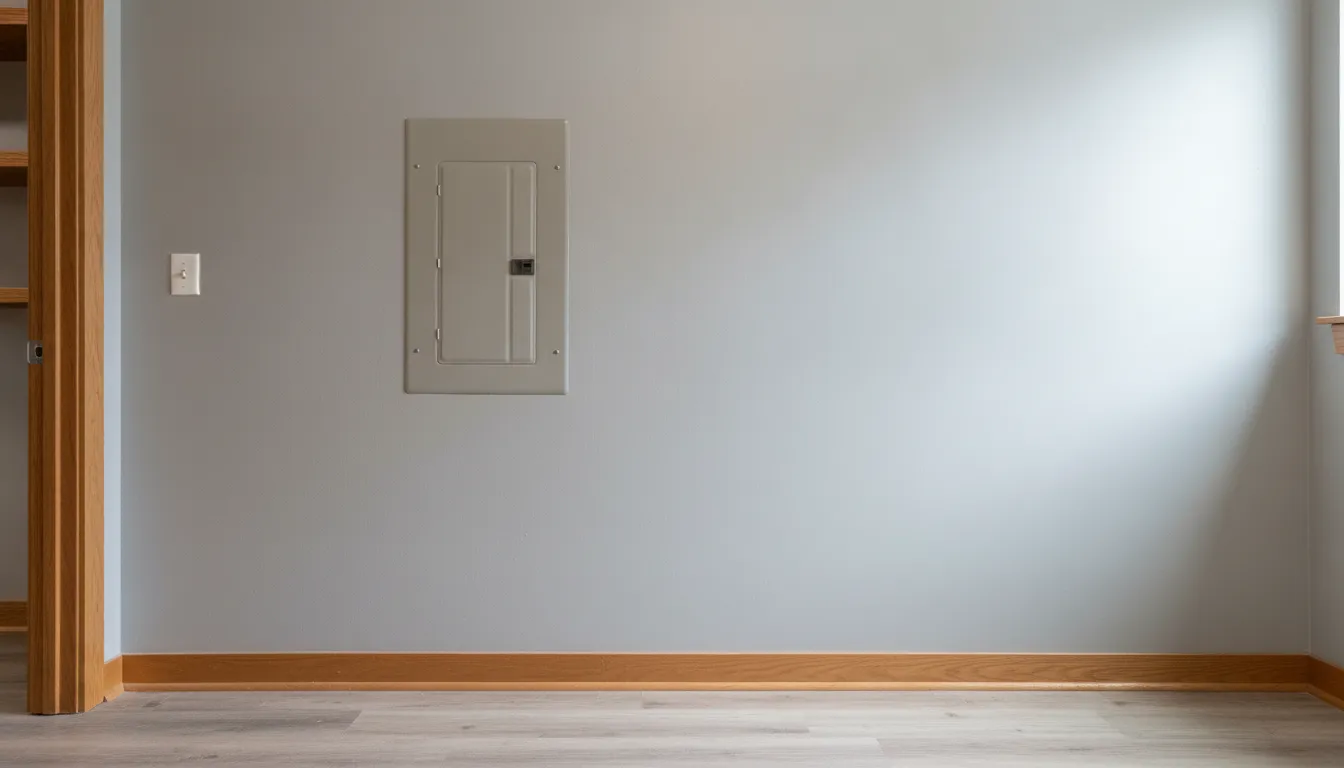
- The room or wall where the panel sits, and whether a door, shelf, or stored items block it.
- Any label you can read from outside, such as a main rating printed on the door.
- Whether lights flicker, breakers trip, or part of the house loses power, and when that started.
- Rust, moisture, scorch marks, or a buzzing sound you can notice without opening the cover.
- Recent or planned changes, such as a remodel, a new appliance, or an EV charger.
Those notes are observations, not a diagnosis. A flickering light can come from a loose device, a tired breaker, or equipment that needs more than a new cabinet. The electrician decides that on site. If you only need help sorting a symptom, the separate home electrical troubleshooting guide covers what to record before you call. This page starts once replacement is the project you are planning.
How an electrician assesses the panel
An assessment looks at the cabinet, the way the circuits land in it, and the condition of the equipment around it. The electrician may check the main rating, available breaker spaces, grounding and bonding, signs of heat or corrosion, and whether the existing wiring can land on a new panel. That review is what turns a guess into a scope.
AllFix can assess a residential electrical system and explain the appropriate next step. On the residential electrical page, a panel review is one of the licensed services offered to homeowners. The same visit can also look at related residential work, such as a dedicated 240V circuit, if that is part of your plan. It is not a promise that the panel is the only thing that needs attention.
Ask the electrician to separate three ideas in plain language:
- What is being replaced, and what is being left in place.
- Whether any related work, such as grounding, a meter coordination, or a circuit change, is required for this installation.
- What is not included, so a later project is not mistaken for part of this one.
If the assessment shows the better path is a capacity change rather than a like-for-like cabinet, that is a different project. Do not treat this guide as the place to choose between them. Get that distinction in writing before you compare estimates.
Who handles the Washington permit and inspection
In Washington, most electrical work needs a permit and an inspection, whether the job is a new installation or a repair or replacement of existing equipment. L&I is direct about who buys that permit. The person or company performing the work buys it before the work starts. You cannot use a permit someone else purchased. If you hire a contractor, that contractor must buy the permit for the work they do on your property. Asking a homeowner to buy the contractor's permit is against the law, and that permit is not valid.
L&I also says you must request inspection before any electrical work is covered. The request is due no later than three business days after the work is complete, or one business day after any part of the installation is energized, whichever comes first. Skipping that request can bring civil penalties. L&I inspects to the 2023 National Electrical Code in its own jurisdiction. Some cities run their own permits and inspections. If the job is in one of those cities, or in Tacoma Power's service area, the permit comes from that jurisdiction instead of L&I. The electrician should name which office applies to your address.
A written quote should say that the contractor will buy the permit and request the inspection. L&I also recommends checking that each electrician on the job displays a current certificate, and that any trainee is supervised on the same site. Those are reasonable items to confirm before the truck arrives. The official starting point is L&I's electrical permit basics page.
How to plan access, power, and the workday
Replacing a panel takes the house off normal power for part of the day. Plan for that before the date is set. Clear a path to the panel that an inspector can use. L&I will not complete an inspection if the site is not safe and accessible. Move storage, laundry, and furniture away from the cabinet, and tell the electrician about pets, locked gates, or a panel in a closet or garage.
Think through what must stay available while the power is off:
- Medical equipment, a well pump, a sump pump, or refrigeration that cannot sit dark.
- Phone charging and a flashlight, since overhead lights may be out.
- Anyone who needs notice, including tenants in a rental house.
AllFix responds to a request within one business day. Service timing after that may be one to three business days, not an emergency or same-day visit. Hours are Monday through Friday, 7:00 AM to 5:00 PM. If you manage a rental, share the tenant's access notes and a time window when someone can be home. Do not ask a tenant to open the panel or reset equipment they do not understand.
Related residential work can share the same visit when it belongs in the scope. A 240V outlet planning article covers how to describe a dedicated circuit. Keep that as its own line on the estimate if it is not part of the panel itself. Mixing the two makes the permit description and the inspection harder to follow.
What to confirm on the written estimate
AllFix prices every project through a free estimate after the work is understood. There is no published rate and no instant price. "Free Estimates — Always" is the model, and the estimate is where the scope becomes clear. A useful panel estimate names the work in sentences you can check, not a single lump with no description.
Before you accept a date, confirm these points in writing:
- The property is a residence, and the work is residential electrical only.
- The contractor will purchase the permit and request the inspection.
- Which jurisdiction issues that permit for your address.
- What is included: the panel, the reconnection of existing circuits, and any related repairs the assessment found.
- What is excluded, so a future circuit, charger, or remodel is not assumed.
- How long the power is expected to be off, and who you call if access changes.
AllFix is a locally owned, licensed, bonded, and insured multi-trade contractor. Washington contractor license ALLFIL*831CW has been active since 2017. Electrical work is a licensed residential service, separate from handyman repairs and from commercial remodeling. If the same visit also needs drywall repair after the cabinet is set, that finish work can be discussed as a separate scope. It should not be mistaken for the electrical permit itself.
If you want a broader look at how residential electrical estimates are built, the residential electrical estimate guide walks through what to gather before you request one. Use it as a checklist. Use this page for the panel project.
What happens after you request an estimate
You describe the home, the panel location, and what you have noticed. AllFix replies within one business day. A site visit, when one is needed, is how the electrician confirms the scope. The free estimate follows that understanding. It is not a number produced from a photo alone, and it is not a promise of emergency service.
Service is centered on Moses Lake and reaches supported communities in Grant County and Adams County. Do not assume every community has the same schedule or scope. Ask when you call. The service areas page lists the cities AllFix names, including Ephrata, Quincy, and Othello.
After the work, keep the permit and the inspection approval with your house papers. L&I notes that missing permits and approvals can affect a later sale and your ability to show the work was inspected. The approval is the record that the installation was reviewed. It is not a warranty you invent, and it is not a substitute for the contractor's own workmanship.
Frequently Asked Questions
Can I replace an electrical panel myself?
Only if you are qualified to do the work, and you still need the proper permit and inspection. L&I says to hire a licensed electrical contractor if you do not have a solid understanding of electrical wiring. Panelboards are listed as work that requires a permit. AllFix recommends leaving the installation to a licensed residential electrician.
Does a new panel always mean more power?
No. A replacement can install a new cabinet at the same rating as the old one. Adding capacity, breaker spaces, or a service change is a separate decision. Ask the electrician to say which one the estimate covers.
Who buys the electrical permit in Washington?
The person or company performing the work buys it before starting. If you hire AllFix or another contractor, that contractor must purchase the permit. A permit you buy for someone else's work is not valid.
Will the power be off during the replacement?
Plan on losing normal power while the panel is changed. Tell the electrician about medical equipment, pumps, refrigeration, and anyone who needs notice. Confirm the expected window on the estimate.
Does AllFix replace commercial electrical panels?
No. Electrical services are residential only. AllFix does not perform commercial or industrial electrical work. Commercial remodeling and facility maintenance are separate services and do not include commercial electrical panels.
Should a 50-year-old panel be replaced?
Age alone is not the decision. A licensed electrician should look at the cabinet, the breakers, and the condition of the equipment. Rust, heat, moisture, or a panel that cannot accept a safe repair are reasons to ask for that assessment. Do not open the cover to decide for yourself.
Will insurance pay for a new panel?
Ask your insurer. Coverage depends on your policy and on why the work is being done. AllFix does not decide claims. A written scope and the inspection approval are useful records to keep, whatever the insurer says.
Request a free electrical estimate
If you are planning an electrical panel replacement for a home in AllFix's service area, start with a clear description and a free estimate. Call (509) 761-4778 or send the project through the contact form. You can also call 1-855-ALLFIX-1. AllFix responds within one business day. Service timing may be one to three business days after the work is understood.
Tell Us About Your Project
Fill out the form below and we'll contact you within 1 business day.